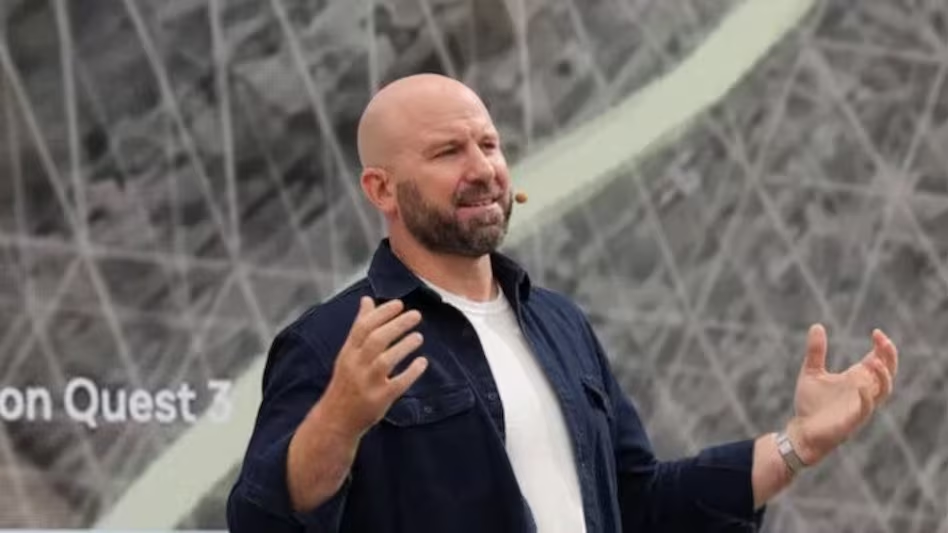
Meta’s Chief Technology Officer Andrew Bosworth has spoken in support of the company’s recent job cuts, saying that investments in virtual reality need to be adjusted to match how fast the technology is actually growing.
Speaking at the World Economic Forum in Davos, Bosworth said that while Meta still believes in virtual reality and the metaverse, the growth of VR has been slower than expected. Because of this, the company needs to be practical and make sure its spending is “right-sized”.
Why Meta Is Cutting Jobs
Meta recently announced layoffs affecting around 10 percent of employees in its Reality Labs division, which focuses on VR and metaverse products. This means more than 1,000 jobs are being cut.
Reality Labs works on products like Meta Quest VR headsets, VR software, and virtual platforms such as Horizon Worlds. However, fewer people are buying VR headsets than Meta had hoped, leading the company to rethink its plans.
Bosworth explained that Meta cannot continue investing at the same high level if user adoption is not keeping pace.
Not Quitting VR, But Slowing Down
Meta has made it clear that these layoffs do not mean the company is giving up on VR or the metaverse. Instead, it is changing its focus and reducing spending in areas that are not performing as expected.
The company still plans to work on immersive technology, but it may put more effort into products that people use more easily today, such as AI-powered devices, smart glasses, and mobile platforms.
More Changes at Reality Labs
As part of the restructuring, Meta has also shut down several VR game studios, including Armature Studio, Twisted Pixel, and Sanzaru. In addition, Meta plans to end Horizon Workrooms, its virtual office collaboration tool, by February 2026.
These steps show that Meta is trimming parts of its VR business that are not seeing strong demand.
A Reality Check for the Metaverse Vision
Meta changed its name from Facebook in 2021 to focus heavily on the metaverse. Since then, the company has spent billions of dollars on VR and AR projects. However, the slower pace of adoption has forced Meta to accept that mainstream VR may take much longer to become popular.
Industry experts say this move reflects a broader trend in the tech world, where companies are now focusing on efficiency and realistic growth, rather than big long-term bets with uncertain returns.
Final Take
Meta’s CTO says the layoffs are not about giving up, but about being realistic. The company still believes in VR and immersive technology, but it wants to invest wisely and in line with how the market is actually responding.