New
Delhi : Advancing the Government of India’s vision of
transforming border villages into engines of growth and opportunity, the
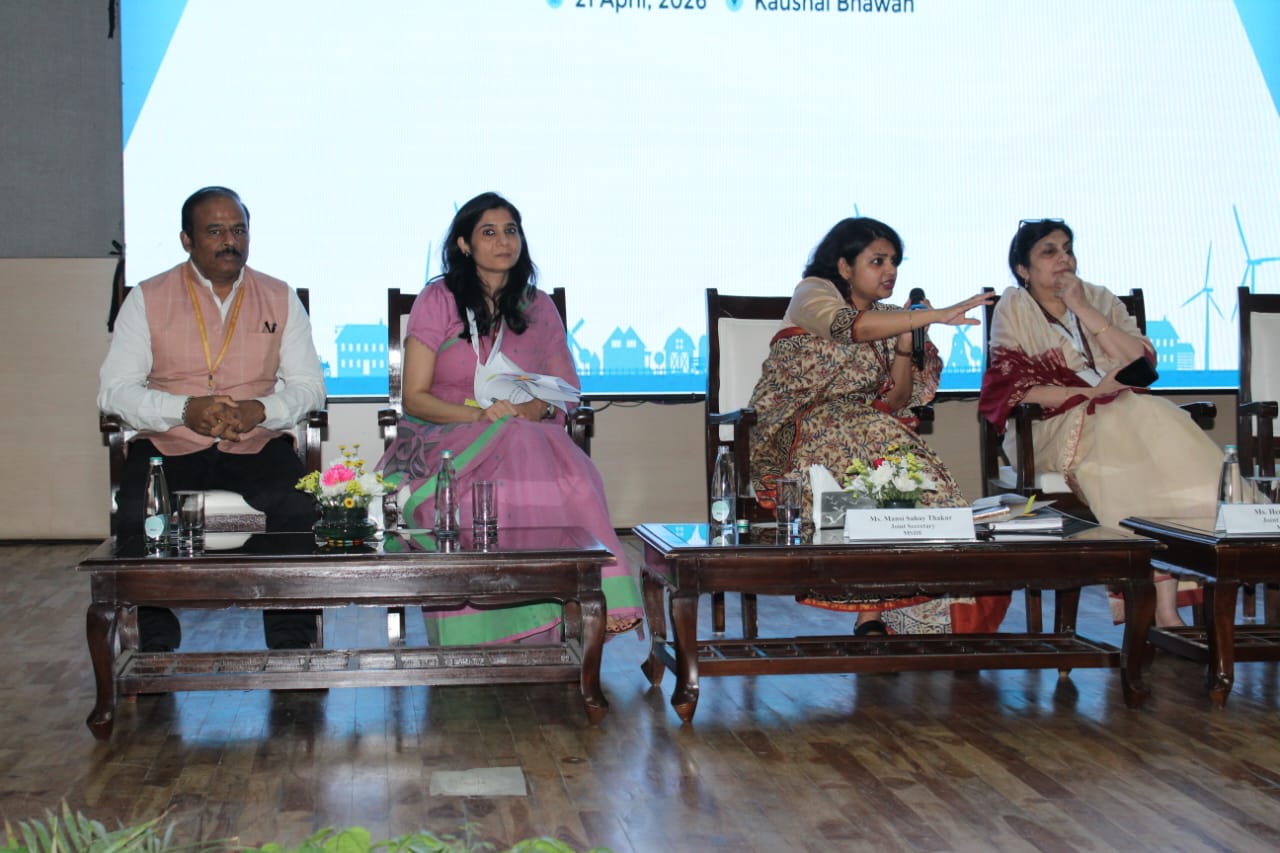
Ministry of Skill Development and Entrepreneurship (MSDE) today convened a
Capacity Building and Review Workshop under the Vibrant Villages Programme
(VVP), themed “Viksit Gaon for Viksit Bharat”, at Kaushal Bhawan, New
Delhi. The workshop brought together key stakeholders including the Ministry of
Home Affairs (MHA), Ministries of Textiles, Tourism, and Rural Development,
along with District Administrations, State Skill Development Missions (SSDMs) from
Arunachal Pradesh, Himachal Pradesh, Ladakh, Sikkim and Uttarakhand, and Sector
Skill Councils (SSCs), creating a focused platform to drive convergence and
accelerate skill-led development across India’s strategically important border
regions.
The Vibrant
Villages Programme, a flagship initiative of MHA, aims to develop 662 villages
across Arunachal Pradesh, Himachal Pradesh, Uttarakhand, Sikkim, and Ladakh as
self-reliant, well-connected “first villages” of the country. In alignment with
this vision, MSDE is facilitating locally relevant, demand-driven skilling
initiatives to enhance livelihood opportunities in these regions.
MDSE plays a
critical role in implementing skill development proposals under VVP from
receiving and examining proposals from MHA, mapping them to appropriate
schemes, sanctioning projects, and ensuring robust implementation and
monitoring, to facilitating assessment and certification through the Skill
India Digital Hub (SIDH). To date, MSDE has sanctioned 74 skill development
proposals under the programme, marking significant progress in operationalising
skilling interventions in border districts.
The deliberations
focused on reviewing the status of approved and ongoing VVP skill projects,
identifying key implementation challenges such as trainer availability,
beneficiary mobilization, and infrastructure gaps, and strengthening
convergence across stakeholders. SSCs and SSDMs played an important role in
providing inputs on programme design, trainer empanelment, and strengthening
market linkages to ensure better outcomes.
Looking ahead,
MSDE laid out a focused and action-driven roadmap to strengthen on-ground
implementation. Districts will be guided to develop robust project pipelines
with clearly defined timelines, training locations, trainers, and target
beneficiaries ahead of proposal submission. Emphasis will be placed on rapidly
operationalising in-situ training by utilising existing government
infrastructure such as schools, ITIs, and community centres to enable swift rollout.
To address
implementation challenges, enhanced handholding support will be provided
through SSDMs and SSCs, particularly in areas such as proposal development,
trainer onboarding, and compliance with scheme norms, supported by well-defined
standard operating procedures. A structured coordination framework will also be
institutionalised among District Administrations, SSDMs, SSCs, and MSDE to
ensure continuous monitoring, effective issue resolution, and timely course
correction.
The workshop also
fostered peer learning among districts, highlighting innovative practices and
scalable solutions. Discussions underscored the importance of institutional
coordination, real-time monitoring, and responsive implementation mechanisms to
ensure that skilling initiatives translate into sustainable livelihood
outcomes.
Smt. Hena Usman,
Joint Secretary, MSDE; Smt. Manasi Sahay Thakur, Joint Secretary, MSDE; Smt.
Archana Mayaram, Economic Advisor, MSDE; senior officials from the MSDE, MHA
and partner ministries, state governments, and representatives of SSDMs,
District Administrations, and SSCs were also present on the occasion.