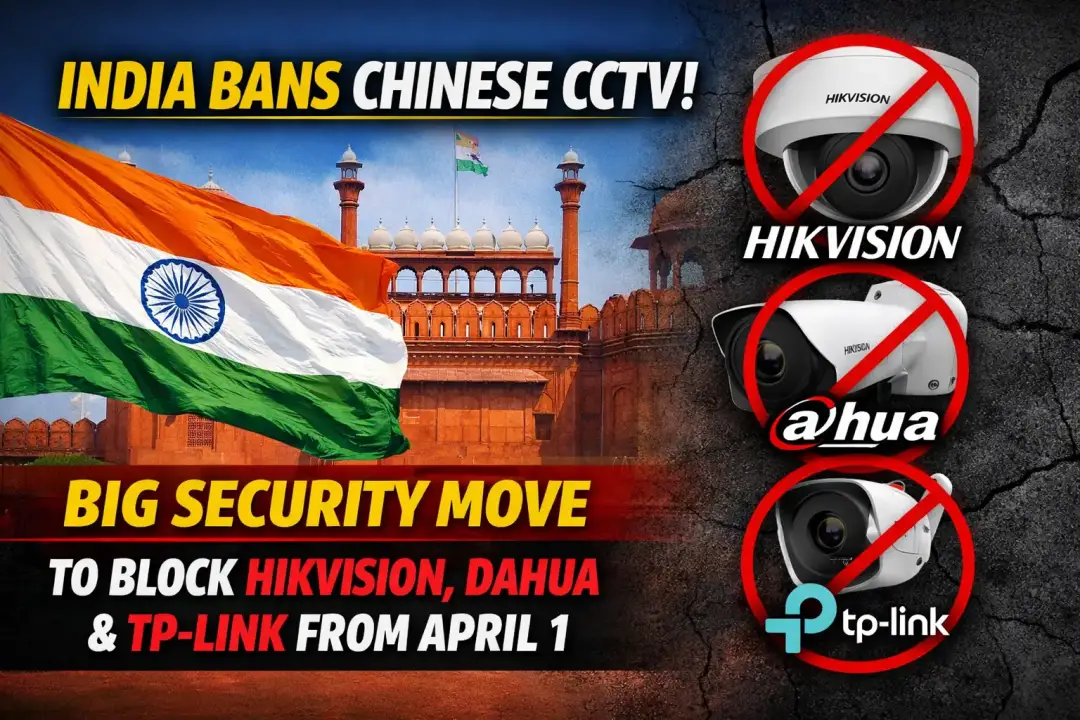
India is preparing for a major shift in its surveillance and security ecosystem as reports suggest that the government is set to ban the sale of Chinese CCTV cameras starting April 1, 2026. The move is part of a broader effort to strengthen national security and reduce dependence on foreign technology, especially from China.
The decision is expected to impact some of the biggest names in the global CCTV market, including Hikvision, Dahua, and TP-Link, which have had a strong presence in India over the years.
Why India Bans Chinese CCTV
The main reason behind this move is security and data protection. CCTV cameras today are not just recording devices, they are connected to the internet and can store or transmit sensitive data. This raises concerns about who has access to that data and how it might be used.
To address this, the Indian government has made it mandatory for all CCTV cameras sold in the country to meet strict certification standards. These certifications are meant to ensure that the devices are safe, secure, and free from any risks related to data leaks or remote access.
However, reports suggest that several Chinese companies are either unable or unlikely to meet these requirements. As a result, their products will not receive approval, effectively blocking them from being sold in India.
What Changes from April 1
Starting April 1, only CCTV cameras that have government certification will be allowed to be sold in India. This means that many Chinese brands will disappear from the market unless they comply with the new rules.
Retailers and distributors will also have to adjust quickly, as selling non-certified devices could lead to penalties. For consumers, this means that the options available in the market will change significantly.
Impact on the Indian Market
The decision is expected to reshape the CCTV industry in India. For years, Chinese brands dominated the market due to their competitive pricing and wide product range. Many homes, offices, and businesses rely on these devices.
With the ban coming into effect, Indian manufacturers are likely to gain a major advantage. Domestic companies have already been growing steadily, and this move could give them a bigger share of the market.
At the same time, non-Chinese global brands may also step in to fill the gap. This could lead to more competition and better quality products in the long run.
Will Prices Go Up?
One immediate concern for buyers is pricing. Chinese CCTV cameras were often more affordable compared to other options. With fewer low-cost choices available, prices may rise slightly in the short term.
However, experts believe that as local production increases and competition improves, prices could stabilize over time. The focus is likely to shift from just affordability to quality and security.
What It Means for Existing Users
There is no need for panic among those who already have Chinese CCTV cameras installed. The ban applies mainly to new sales, not to existing devices. Current users can continue using their systems without any interruption. However, future upgrades or replacements will need to follow the new certification rules.
Final Thoughts
The move where India bans Chinese CCTV marks an important step towards building a more secure digital infrastructure. It reflects the government’s growing focus on data safety, privacy, and self-reliance.
While the transition may bring some short-term challenges, especially for buyers and sellers, it is likely to benefit the country in the long run. A more regulated and secure CCTV ecosystem could help improve trust and reduce risks in an increasingly connected world.