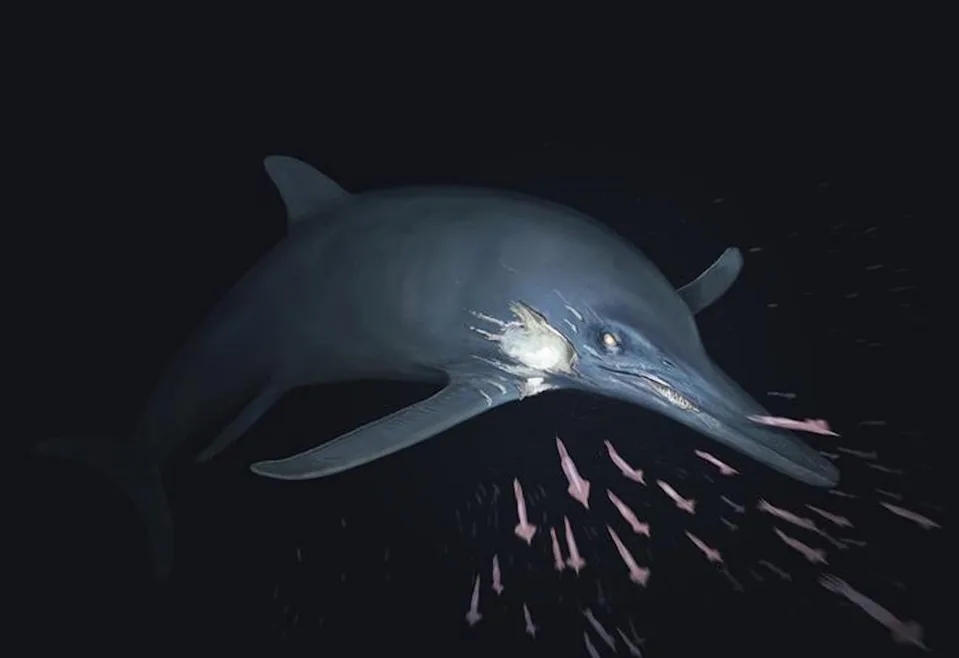
About 180 million years ago, long before humans existed, the oceans were ruled by giant reptiles called ichthyosaurs. These were not dinosaurs. They were air-breathing reptiles that had adapted so well to water that their bodies looked almost exactly like dolphins, sleek, fast, and built for hunting.
The fossil found at the Mistelgau clay pit near Bayreuth, Germany belongs to one of the largest of these creatures: Temnodontosaurus. It was roughly 21 feet long and was once a top predator in the Jurassic ocean.
What makes this particular fossil stand out is how well preserved it is. Researchers recovered a nearly complete skull, lower jaw, shoulder, spine, fins, and over 100 teeth. Even delicate parts like the eye socket and the roof of the mouth survived, which is extremely rare for a fossil this old.
It Was Badly Injured
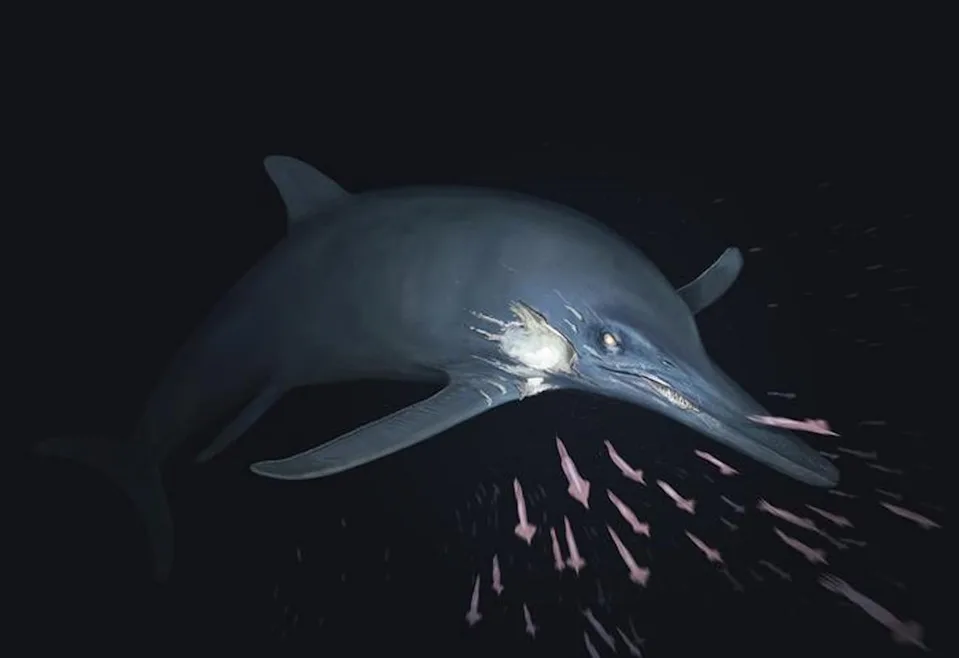
When scientists looked closely at the bones, they found something unexpected. The fossil shows clear signs of injury around the shoulder joint and the jaw. These injuries would have made it very hard for the animal to catch and eat fast-moving prey.
For a predator that size, that is a serious problem. Temnodontosaurus relied on speed and a powerful bite to hunt. Without those, getting food becomes almost impossible.
But this one did not die right away. Somehow, it kept going.
Stones in the Stomach
Here is where things get really interesting.
Inside the fossil's belly area, researchers found small stones called gastroliths, or stomach stones. These are rarely found in ichthyosaurs, especially in large predators like Temnodontosaurus. Scientists believe the stones may have worked as internal grinding tools, helping break down food in the digestive system.
This suggests the injured animal changed what it ate. Instead of chasing fast fish, it probably switched to softer, slower, easier-to-catch food. The stomach stones helped it digest that different diet.
The teeth also tell part of the story. They are heavily worn, which shows the animal had been eating and chewing for a long time under difficult conditions. A predator that was simply dying of its injuries would not have teeth worn down like that. It would have stopped eating much earlier.
Study author Stefan Eggmaier said the injuries likely significantly limited the animal's ability to catch prey, but the worn teeth and stomach stones are evidence that it survived regardless.
Why Scientists Are Excited
This discovery matters for a reason beyond just the survival story.
Until now, scientists believed Temnodontosaurus had disappeared from this part of Germany much earlier. This fossil is one of the youngest examples of its kind ever found, showing the genus survived longer in the Southwest German Basin than previously known.
Ulrike Albert, one of the study authors, noted that representatives of this genus had mainly been known from older geological layers. The Mistelgau discovery now shows these large marine reptiles persisted longer than the fossil record had previously shown.
That changes how scientists think about Jurassic ocean ecosystems. If this predator was still alive later than expected, it means scientists have to reconsider what other creatures shared the ocean with it, what the food chain looked like, and how the environment was changing during that period.
What This Fossil Teaches Us
Paleontologists have been digging at the Mistelgau site since 1998. This specimen stands out as especially significant because of both its state of preservation and what it reveals about ancient marine life. More studies on the teeth and bone structure are planned to learn even more.
The bigger lesson here is about adaptability. An animal that was built to be a fast, powerful hunter found itself severely limited. Rather than simply declining, it changed its behavior. It found another way to eat and another way to survive.
That happened 180 million years ago, with no help from anyone, in an ocean full of other things trying to eat it.