Kolkata:
For thousands living with Thalassemia, where life revolves around repeated
hospital visits and transfusions, a new centre of hope has emerged in the city.
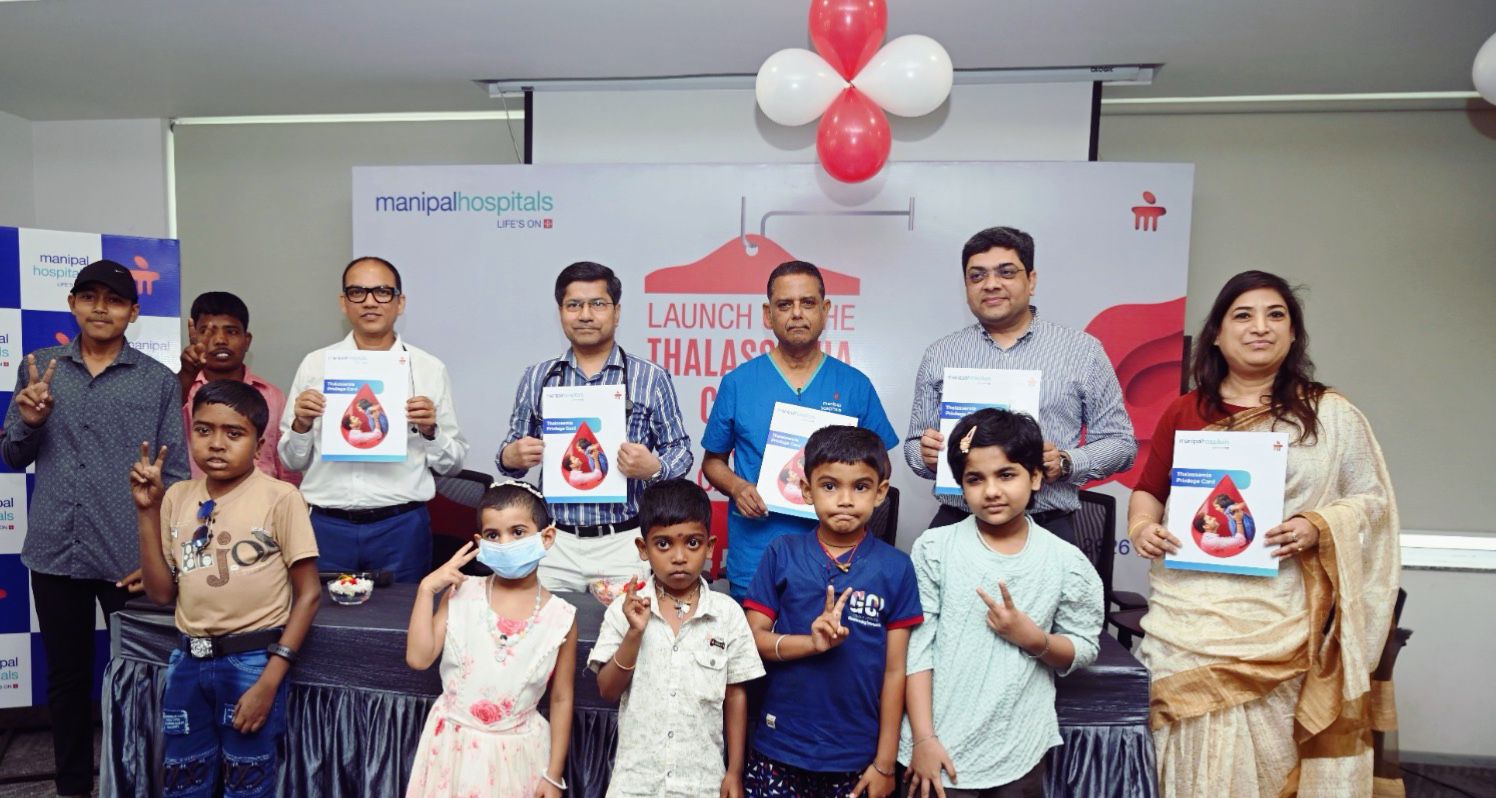
Manipal Hospitals Mukundapur today unveiled a dedicated Thalassemia Privilege Clinic and Day
Care Ward at
its Mukundapur facility led by Prof. (Dr.) Rajib De, Head – Clinical
Haematology, Haemato-Oncology & Bone Marrow Transplant, Manipal Hospitals
Mukundapur Cluster, in the presence of of Dr. Saumen Meur, HOD &
Senior Consultant – Paediatrics, Manipal Hospital Mukundapur, Dr. Atanu
Kumar Jana, HOD – Neonatal Unit – Paediatrician and Neonatologist, Manipal
Hospital Mukundapur, Ms. Jayanti Chatterjee, Hospital Director – Manipal
Hospital Mukundapur and Mr. Komal Dashora, Cluster Director -
Manipal Hospitals (Mukundapur Cluster), marking a significant step towards
enhancing comprehensive and patient-centric care for individuals living with
Thalassemia.
The newly inaugurated clinic
has been designed to offer comprehensive thalassemia care under one roof and will
primarily cater to the paediatric age group up to 18 years, ensuring focused
and specialized care for young patients living with thalassemia. The facility integrates diagnostic
services for thalassemia patients and carrier detection, clinical evaluation,
transfusion support through a dedicated thalassemia day care ward, prenatal
diagnosis, genetic counselling, psychological support, multidisciplinary care,
and bone marrow transplantation ensuring truly holistic care. Prof. (Dr.)
Rajib De will be available to run the thalassemia clinic once a week, ensuring
consistent, specialist-led care for patients. Patients will also be provided
with a Thalassemia Privilege Card, enabling them to avail cost-effective care
at the clinic.
Speaking on the occasion,
Prof. (Dr.) Rajib De shared, “Thalassemia remains a major public health
concern in India, with an estimated 100,000 to 150,000 patients living with
the condition and nearly 10,000–12,000 children born with thalassemia major
every year. There is 1.2
thalassaemic birth/1000 live birth in India. The situation is much more
alarming in West Bengal and North-Eastern states of India. With more than 10%
carrier rate and a huge burden of more than 20000 thalassaemia patients
requiring transfusion, this poses a serious health care burden to our
state. The main mode of therapy is
lifelong blood transfusion and iron chelation. No medicine can cure thalassaemia.
The only curative treatment of thalassaemia is Bone Marrow Transplant. Notably,
a dedicated Bone Marrow Transplant unit is also available within the Mukundapur
cluster, enabling seamless access to advanced treatment for eligible patients.”
About the launch of the clinic,
Dr. Ayanabh Debgupta, Regional Director – Manipal Hospitals East, said,
“Eastern India continues to carry a significant burden of thalassemia, with
carrier rates of 8–10% in parts of West Bengal and neighbouring states,
compared to the national average of 3–4%. At Manipal Hospitals, the Thalassemia
Privilege Clinic reflects our commitment to expanding access to affordable,
holistic care for patients across the region. From early carrier detection and
genetic counselling to help prevent thalassemia births, to offering advanced
treatments like Bone Marrow Transplantation, our vision is to move steadily
towards a thalassemia-free society.”
The initiative reflects Manipal
Hospitals’ ongoing commitment to advancing accessible, comprehensive, and
specialized healthcare services. By bringing together expertise,
infrastructure, and patient support systems, the hospital aims to significantly
improve disease management and overall well-being for thalassemia patients in
the region.