Kolkata: Recognising
that timely intervention can often determine outcomes in neurological and other
medical emergencies, Manipal Hospital Mukundapur officially unveiled its
Centre of Excellence for Neurosciences at the Neurosciences Conclave
held today. The conclave brought together leading specialists across neurology,
neurosurgery, neurointervention, spine surgery and allied neurosciences to
discuss the evolving landscape of neurological care and the importance of
integrated, multidisciplinary treatment.
The growing burden of
neurological disorders underscores the urgent need for timely, specialised and
multidisciplinary care. The World Health Organization’s (WHO) latest Global
Status Report on Neurology, released in 2025, highlights neurological
conditions as the leading cause of ill health and disability globally, affecting
more than one in three people worldwide. In India, stroke remains a major
neurological health concern and was responsible for 53.5 deaths per 100,000
population in 2021, according to WHO data. With conditions such as stroke,
epilepsy, neurovascular disorders and complex neurosurgical conditions
requiring timely diagnosis and intervention, the need for integrated centres
that bring together advanced neurology, neurosurgery, neurointervention and
rehabilitation services is increasingly critical.
Against this backdrop, the Centre
of Excellence for Neurosciences brings together expertise across Neurology,
Functional Neurosurgery, Neurosurgery, Neurointervention & Endovascular
Surgery, Spine Surgery, Neuro Rehabilitation, Neuro Physiotherapy, Neuro
Psychology and Neuro Anaesthesia, creating a comprehensive ecosystem for
the management of complex neurological disorders through evidence-based,
patient-centric care.
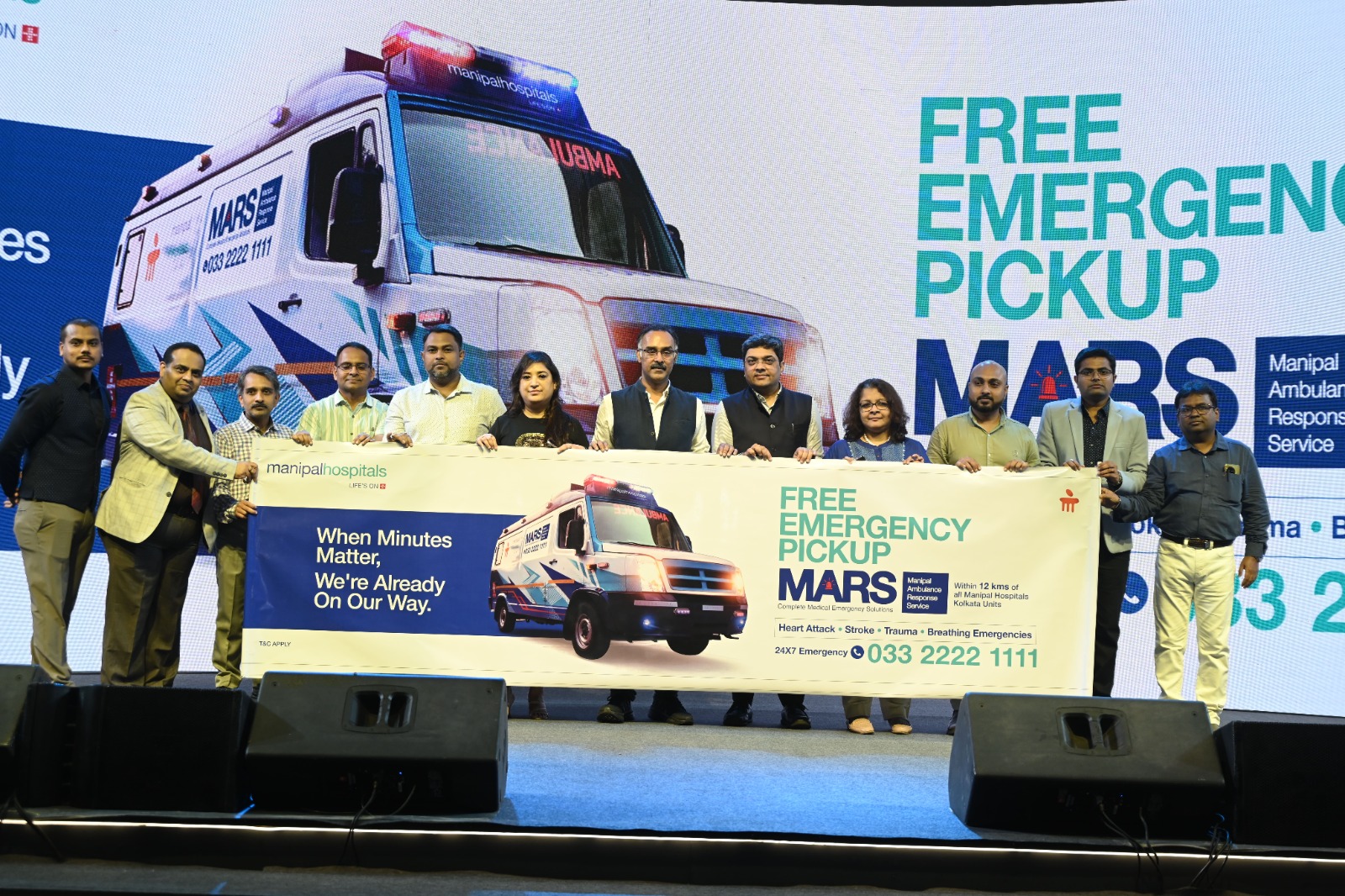
As part of its larger commitment
to strengthening emergency healthcare accessibility, Manipal Hospitals East
also announced a Free Emergency Pickup Service for eligible emergency
patients residing within approximately a 12-km radius of participating Manipal
Hospitals in Kolkata. Under the initiative, patients assessed as requiring
emergency care by the MARS Command Centre and Team MARS can avail themselves of
free ambulance transportation to the nearest participating Manipal Hospital
Emergency Department, subject to ambulance availability and service protocols. The
initiative is particularly aimed at reducing delays in critical conditions such
as stroke, heart attack, road traffic accidents, severe breathing
difficulty, unconsciousness and other sudden medical emergencies, where every
minute can have a significant impact on survival and recovery. The service
is supported by a 24/7 technology-driven command centre, GPS-enabled ambulance
fleet with constant tracking, QR-enabled location sharing through WhatsApp,
professionally trained emergency response teams and top-of-the-line ambulances
equipped for advanced emergency care. By facilitating faster transportation and
better coordination with hospital emergency teams, the initiative seeks to
ensure that lack of immediate transportation does not become a barrier to
accessing life-saving medical intervention.
Speaking on the occasion, Dr.
Jayanta Roy, Director & Head – Neurology, Manipal Hospital Mukundapur,
said, “Neurological disorders encompass a wide spectrum of conditions, from
stroke and epilepsy to movement disorders, neurodegenerative diseases and other
complex neurological conditions, each requiring a precise and individualised
approach. Stroke remains one of the most time-sensitive neurological
emergencies, where early diagnosis and appropriate intervention can
significantly influence outcomes. Through the Centre of Excellence for
Neurosciences, our focus is to bring together advanced diagnostics, evidence-based
treatment and multidisciplinary expertise to provide comprehensive neurological
care, while also strengthening awareness around the early recognition of
neurological symptoms and the importance of seeking timely medical attention.”
Dr. Anindya Basu, Senior
Consultant and Clinical Lead – Spine Surgery, Manipal Hospital Mukundapur, said, “Spine
surgery has evolved significantly with the advancement of minimally invasive
techniques, allowing us to address a range of spinal conditions while
reducing tissue disruption, blood loss, postoperative pain and recovery time
in appropriately selected patients. At Manipal Hospital Mukundapur, we are
focused on adopting contemporary approaches that combine precision, technology
and clinical expertise to deliver patient-centric spine care. Our Centre of
Excellence for Neurosciences provides an integrated platform where complex
spinal conditions can be evaluated collaboratively and patients can benefit
from a comprehensive continuum of care, from diagnosis and surgical
intervention to rehabilitation.”
Speaking about the role of
advanced neurointervention in time-sensitive emergencies, Dr. Sukalyan
Purkayastha, Director – Neurointervention & Endovascular Surgery, Imaging
Sciences & Interventional Radiology, Manipal Hospital Mukundapur, said,
“Neurointervention has
transformed the management of several complex cerebrovascular conditions by
enabling highly precise procedures through minimally invasive endovascular
approaches. The availability of a dedicated Biplane Cath Lab at our
hospital is a significant advantage in this regard, offering high-quality
real-time imaging from multiple planes and enabling greater precision during
complex neurointerventional procedures. This technology is particularly
valuable in the management of conditions such as acute stroke, cerebral
aneurysms, vascular malformations and other neurovascular disorders, where
accurate imaging and timely intervention are critical to achieving better
clinical outcomes.”
Dr. Milind Deogaonkar, Director
and Senior Consultant – Neurosurgery, Manipal Hospital Mukundapur, said, “The
management of movement disorders has entered an exciting phase with the
availability of advanced neuromodulation therapies such as Deep Brain
Stimulation. At our unit, the Deep Brain Stimulation Clinic brings
together specialised expertise to evaluate and manage patients who may benefit
from this advanced treatment, particularly those with conditions such as
Parkinson’s disease and other movement disorders. DBS requires careful patient
selection, detailed neurological and neurosurgical assessment, precise surgical
planning and long-term follow-up. By bringing these capabilities together
within a specialised clinic, we aim to provide patients with access to
comprehensive and personalised care across the entire treatment journey.”
Adding to this, Dr. Dipendra
Kumar Pradhan, Clinical Lead & Senior Consultant – Neurosurgery, Manipal
Hospital Mukundapur, said, “Modern neurosurgery extends far beyond
conventional surgical intervention and increasingly relies on precision,
advanced imaging, technology and multidisciplinary decision-making. From
complex brain and spine disorders to traumatic and other neurosurgical
conditions, each patient requires a carefully planned approach based on the
nature and complexity of the disease. Here, our neurosurgical team works
closely with neurologists, neurointerventional specialists, radiologists,
anaesthetists and rehabilitation experts to ensure that patients receive
coordinated care. The Centre of Excellence for Neurosciences strengthens this
collaborative model and enables us to bring together specialised expertise for
the management of complex neurosurgical cases.”
In the conclave, Dr. Ayanabh
Debgupta, Regional Director, Manipal Hospitals East, said, “The
launch of the Centre of Excellence for Neurosciences reinforces our commitment
to providing advanced, comprehensive and integrated neurological care across
Eastern India. At Manipal Hospitals, we recognise that neurological
emergencies, particularly stroke, demand immediate action, as every minute can
influence the patient’s outcome. With nearly 500 stroke cases occurring every
day, building a system that enables rapid recognition, response and access to
specialised care is critical. All our hospitals are stroke-ready, supported by
multidisciplinary clinical expertise and advanced infrastructure. Through our
Manipal Advanced Roadside Emergency Services (MARS) initiative and the newly
announced Free Emergency Pickup Service, we are strengthening the emergency
care pathway by enabling faster transportation and seamless coordination with
our hospital teams. Our endeavour is to ensure that patients can reach the
right specialist and receive the right intervention at the right time, thereby
improving the chances of better outcomes and recovery.”
The official launch of the Centre
of Excellence for Neurosciences, together with the Free Emergency Pickup
Service, reflects Manipal Hospitals East India’s broader focus on building
an integrated continuum of care, from rapid emergency response and advanced
diagnostics to specialised intervention, surgery, rehabilitation and long-term
recovery.
Through these initiatives,
Manipal Hospitals East India aims to redefine emergency healthcare
accessibility in Kolkata by ensuring that timely transportation is never a
barrier to life-saving treatment, while reinforcing its commitment to
compassionate, patient-centric care and a stronger, more responsive emergency
healthcare ecosystem for the community.