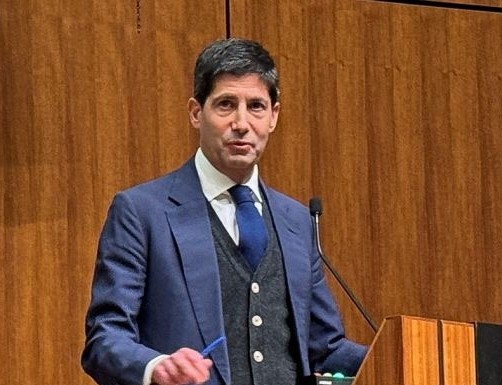
MUMBAI – SBI Research today released the latest edition of its economic report, titled “F.E.D. Confidential: Fearless, Enigmatic and Defiant...”, analyzing the substantial institutional transformations underway at the US Federal Reserve under its newly appointed Chair, Kevin Warsh. The comprehensive study evaluates how the Fed's revamped operational playbook and communication shift are poised to redefine the functioning of global central banks and broader financial markets in an era of technological disruption and evolving economic narratives.
The report highlights that Chairman Warsh's core institutional philosophy favors a streamlined approach to central banking, advocating for a narrow focus on core mandates, a smaller balance sheet, minimized forward guidance, and a return to market-driven pricing of risk. Moving away from the extensive forward guidance models of the Bernanke and Powell eras, the new leadership is shifting toward a minimalist, "reaction function" approach. While this structural shift aims to restore long-term monetary discipline, the report notes that a sudden drop in direct policy guidance risks introducing near-term market volatility and raising the global term premium as investors adjust to a less predictable communication style.
To execute this broad-based transition, the Federal Reserve has launched five specialized internal task forces focused on communication protocols, balance sheet normalization, inflation frameworks, productivity and employment metrics, and real-time data integration. While these committees are not legally binding on the Federal Open Market Committee (FOMC), they serve as crucial strategic tools to redefine policy implementation. The report also emphasizes that the FOMC's voting arithmetic remains highly consensual; a potential rate hike or policy pivot will depend on Warsh’s capacity to build alignment among the diverse hawkish, centrist, and dovish factions within the 2026 board.
On the market front, SBI Research points out a clear detachment between official policy rates and real consumer borrowing costs. Market indicators from June 2026 show that yields on 30-year mortgages, auto loans, and credit cards have risen independently of the effective federal funds rate, embedding higher bank margins and risk premiums. This creates a policy paradox where any subsequent interest rate hikes could disproportionately squeeze variable-rate households and riskier borrowers. Concurrently, the recent strength of the US Dollar serves as a clear market endorsement of US growth exceptionalism and high yields, though it places sustained currency depreciation pressure on emerging market economies.